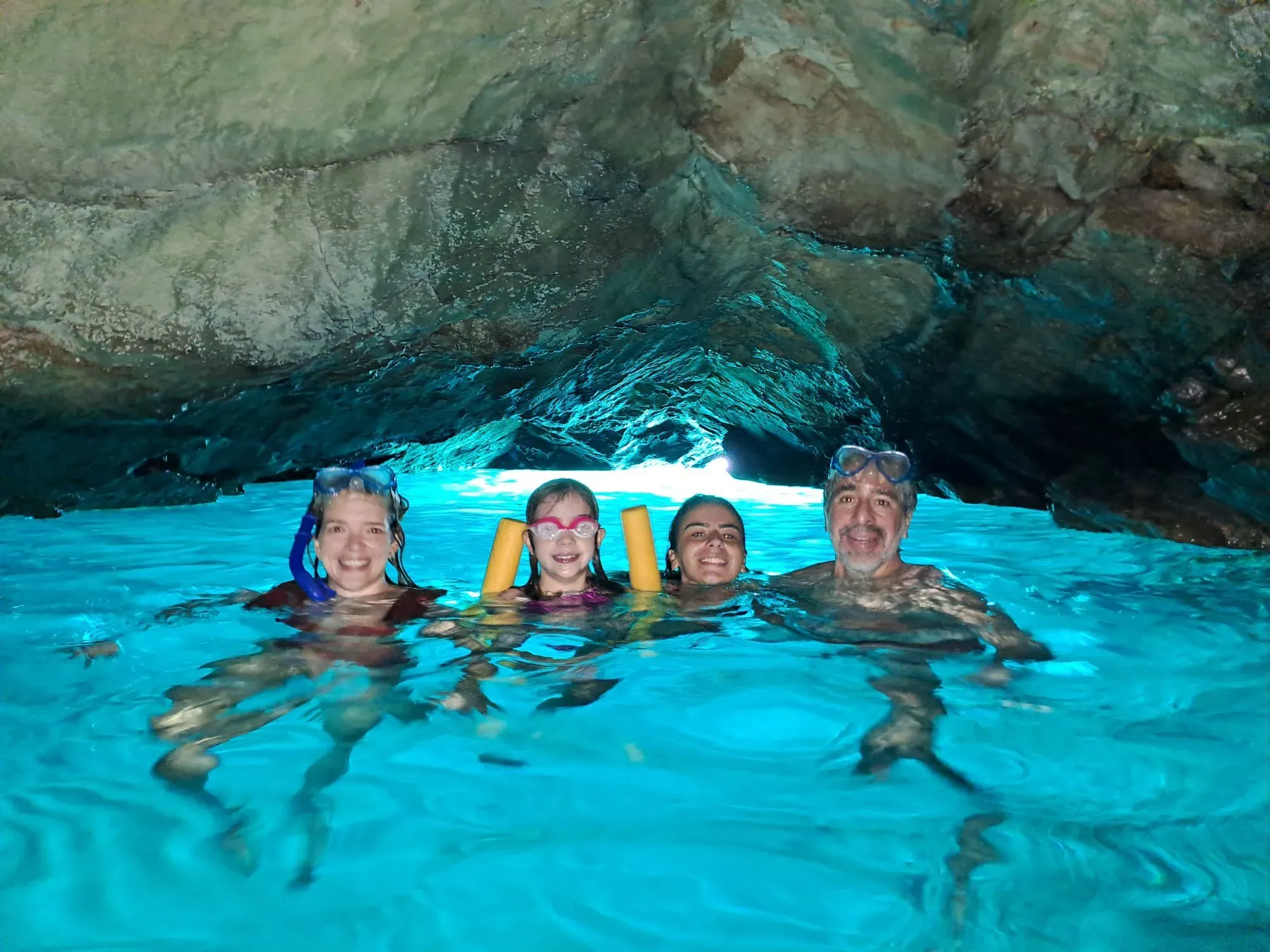
There are two Blue Caves in Croatia, and most people planning a trip do not realise it. The world-famous one — Modra špilja — is on the island of Biševo near Vis, several hours from Dubrovnik. The Blue Cave you will actually visit from Dubrovnik is a different cave entirely, on the island of Koločep, about 20 minutes away by speedboat. Knowing which is which saves you a long, crowded day and points you to the better-value experience.
This guide clears up the confusion, explains what the Dubrovnik Blue Cave actually is, tells you honestly whether it is worth it, and shows you how to see it at its best — without the queues.
Wait — which Blue Cave?
The mix-up is completely understandable. Tour-agency windows across Dubrovnik, Split and Hvar all show the same glowing blue photo, and the name “Blue Cave” gets used for two separate places:
- Modra špilja on Biševo (near Vis). This is the celebrated one, publicised by an Austrian painter back in 1884. It is entered by small boat through a narrow arched opening, and in peak season the queue to get in can run to a couple of hours. From Dubrovnik it is several hours of sailing each way — effectively a long, full-day commitment.
- The Blue Cave on Koločep (near Dubrovnik). A separate sea cave on the southern cliffs of Koločep, the nearest inhabited island to the city. You reach it in about 20 minutes by speedboat and enter it by swimming. It is smaller, quieter, and on a private boat you can often have it to yourself.
Both glow for the same reason — sunlight refracting off a pale limestone seabed — but they are not the same cave, and a “Blue Cave tour from Dubrovnik” almost always means Koločep, not Biševo.
The Blue Cave near Dubrovnik: what it actually is
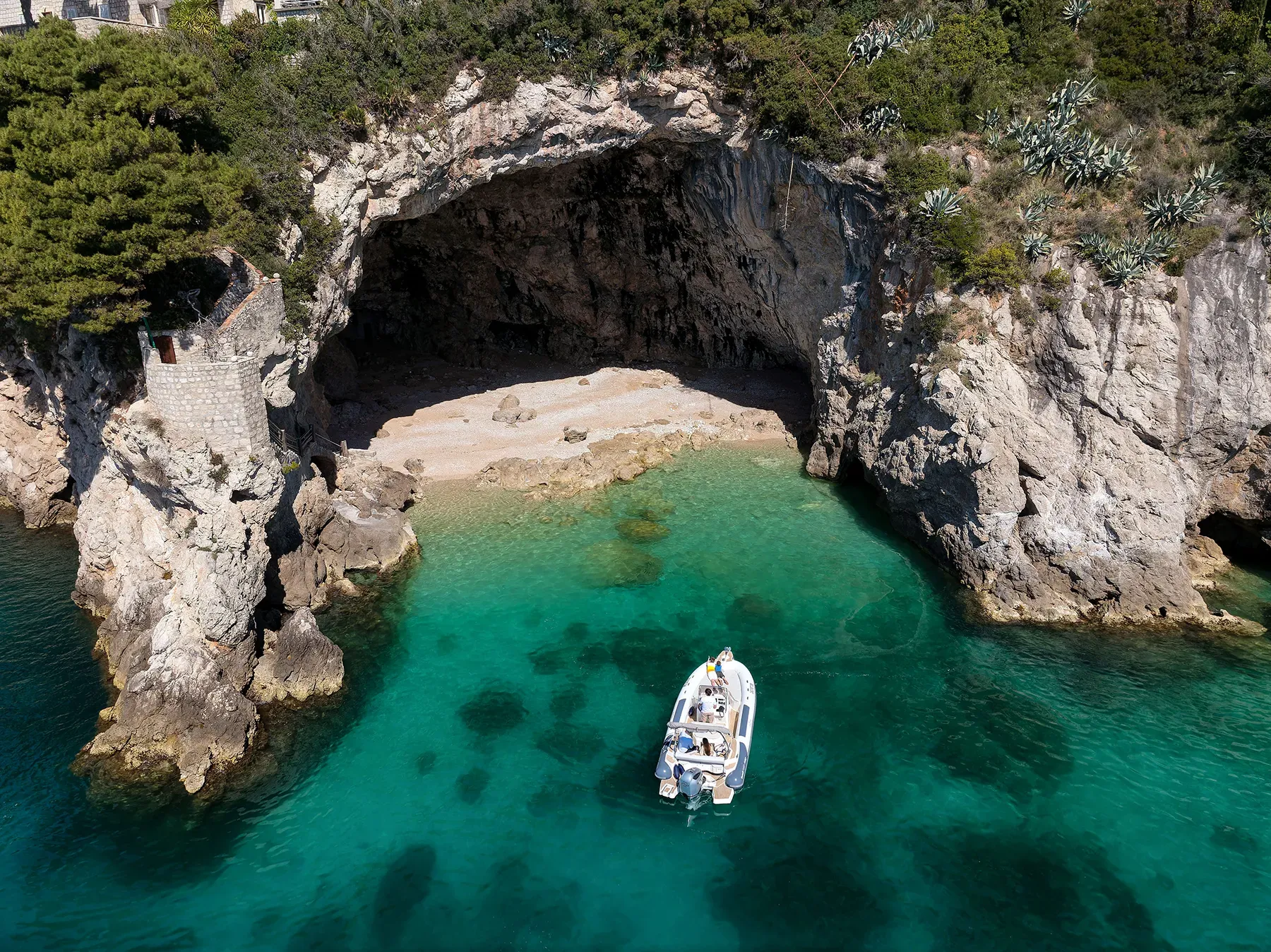
Koločep — locally called Kalamota — sits at the southern edge of the Elaphiti archipelago, roughly ten kilometres north-west of Dubrovnik. It is the southernmost inhabited island in Croatia: barely two and a half square kilometres, with a population of around two hundred. Its southern coastline is a continuous run of limestone cliffs broken by hidden coves, and one of those coves holds the cave.
The chamber is about fifteen metres across, with a vaulted ceiling four to five metres above the water. There is no dock and no boat entrance — the only way in is to anchor off the cliff, slip into the sea, and swim through a natural gap in the rock. The transition from open water to the enclosed, lit interior takes only a few strokes, and the change in colour is immediate.
The glow itself is pure physics. Light enters through an opening about a metre and a half below the surface, bounces off the white seabed, and rises through the water column as diffuse blue light — so the water looks lit from within. On a clear late morning it is genuinely startling. On a grey day it dims to ordinary turquoise.
Is the Blue Cave in Dubrovnik worth it?
The honest answer: yes — if you go at the right time and with the right expectations.
What it is not: the vast, world-famous Biševo cavern with a guided boat queue. What it is: a quieter, more intimate chamber you swim into, with glassy-calm water (visibility reaches twenty to thirty metres on a good day), small fish moving through the light shafts, and — if you arrive on a private boat at the right hour — often nobody else inside.
For most guests, that trade is exactly why it is worth it. You give up the “bucket-list landmark” scale and you get a striking blue glow, excellent snorkelling, and no queue, all twenty minutes from the city. Where it disappoints is when people arrive on an overcast afternoon expecting the Biševo experience. Manage the timing, and it delivers.
How to avoid the crowds
This is where a little planning makes all the difference.
Time it to the light — and to the lull

The blue effect is strongest between 10:00 and 13:00 on clear days, because the sun needs to be high enough to reach the submerged opening. That window is also, unfortunately, when most group tours arrive. The fix is to be early within it — arriving as the light turns on, before the mid-morning group boats, gives you both the glow and the quiet.
Always check the forecast, too. The whole experience is tied to direct sunlight; a cloudy sky turns the headline blue into plain turquoise no matter how early you go.
Go by private boat
The single biggest factor in avoiding crowds is not joining a fixed-schedule group tour. On a private speedboat the skipper times your arrival to the light and the gaps between other boats, anchors, and lets you swim in and have the chamber for twenty to thirty unhurried minutes. If a group boat is already there, you swim a nearby cove and circle back. None of that flexibility exists on a shared schedule — which is exactly why group visits so often coincide with the busiest moment.
How to visit: tours that include the Blue Cave
Three of our private tours take in the Koločep Blue Cave, each with a different emphasis:
- Elaphiti Islands — the all-rounder. Pairs the Blue Cave with snorkelling, Lopud’s sandy Šunj beach and island swim stops. Half day from €550, full day from €800.
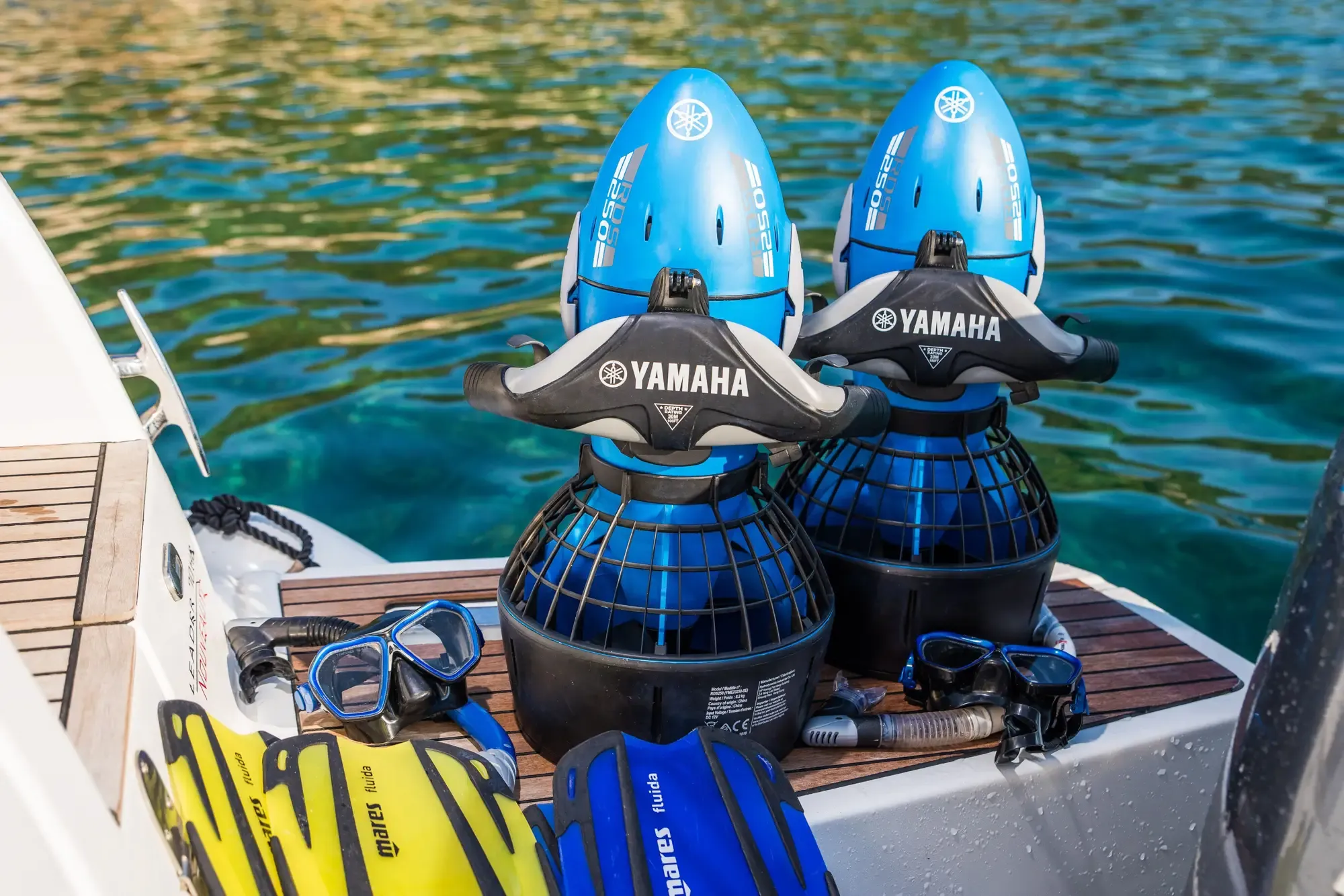
- Hidden Caves & Bays — the active option. Adds the neighbouring Green Cave and two underwater scooters for a hands-on half-day, small groups only. From €1000.
- City & Elaphites — the two-in-one. Runs the Blue and Green caves and Šunj beach in the afternoon, then sails back beneath the Old Town walls and finishes with a guided city walk. From €1000.
All are private to your party, depart from the Old Port, and include the skipper, fuel, drinks and snorkelling gear.
Practical tips before you go
- You will be swimming. Bring a swimsuit you can move in; the entrance is a short open-water swim. Floats and life jackets are on board if you are not a confident swimmer.
- Bring a mask if you own one. Fit matters when you are looking straight down through the blue haze — and a mask is the difference between seeing the seabed and not.
- Aim for late morning on a sunny day. The 10:00–13:00 window with clear skies is non-negotiable for the full effect.
- Keep it quiet. The cave is small and sound carries; arriving calmly makes it better for everyone inside.
- A dry bag or waterproof phone case is worth it for photos inside the chamber.
Frequently asked questions
Is the Blue Cave in Dubrovnik the same as the famous one near Vis and Hvar?
No — they are two different caves. The famous Modra špilja is on the island of Biševo near Vis, several hours' sailing from Dubrovnik, and it is entered by small boat through a narrow opening. The Blue Cave near Dubrovnik is a separate sea cave on the southern coast of Koločep, the nearest inhabited island, about 20 minutes away by speedboat. You enter the Koločep cave by swimming, not by boat. Both glow blue on the same light-through-water principle, but the Koločep version is far closer and much quieter.
Where is the Blue Cave near Dubrovnik?
It is on the southern coast of Koločep Island (locally called Kalamota), the southernmost inhabited island in Croatia, roughly 10 kilometres north-west of Dubrovnik — about 20 minutes by speedboat from the Old Port. The cave sits in a stretch of limestone cliffs that is largely inaccessible on foot, so it is reached only from the water.
How do you get inside the Blue Cave on Koločep?
By swimming. The boat anchors off the cliff face and you swim a short distance — under a minute for most guests — through a natural gap in the rock into the chamber. No boats go inside. Life jackets and floats are available on board for guests who are not confident swimmers, and the water inside the cave is calm even when the open sea is choppy.
What is the best time of day to visit the Blue Cave?
Between 10:00 and 13:00 on a clear day. The blue glow depends on sunlight entering through an opening about 1.5 metres below the surface and reflecting off the white limestone seabed, so the sun needs to be high. Early morning and mid-afternoon are noticeably weaker, and an overcast sky reduces the effect to ordinary turquoise. On a private boat you can time your arrival to the light rather than to a fixed schedule.
Is the Blue Cave in Dubrovnik worth it?
Yes, if you go with the right expectations and at the right time. It is not the giant, world-famous Biševo cave — it is a smaller, quieter chamber you swim into and often have largely to yourself for half an hour. For guests on a private speedboat, that combination of a striking blue glow, clear water for snorkelling, and no queue is what makes it worth the stop. On a grey day or outside the light window, it is far less impressive.
Which boat tour goes to the Blue Cave from Dubrovnik?
Three of our private tours include it. The Elaphiti Islands tour pairs the Blue Cave with Lopud's Šunj beach and island swim stops; Hidden Caves & Bays adds the Green Cave and two underwater scooters for a more active half-day; and the City & Elaphites tour combines the cave with a panoramic sail beneath the Old Town walls and a guided city walk. All are private to your group and depart from the Old Port.
Want to see the Blue Cave at its best — right light, no queue? Tell us when you are visiting and we will time the route around it, or browse the full tour catalogue to see every itinerary that includes Koločep. Message us at info@bluemile-dubrovnik.com and we will plan the day around the cave.