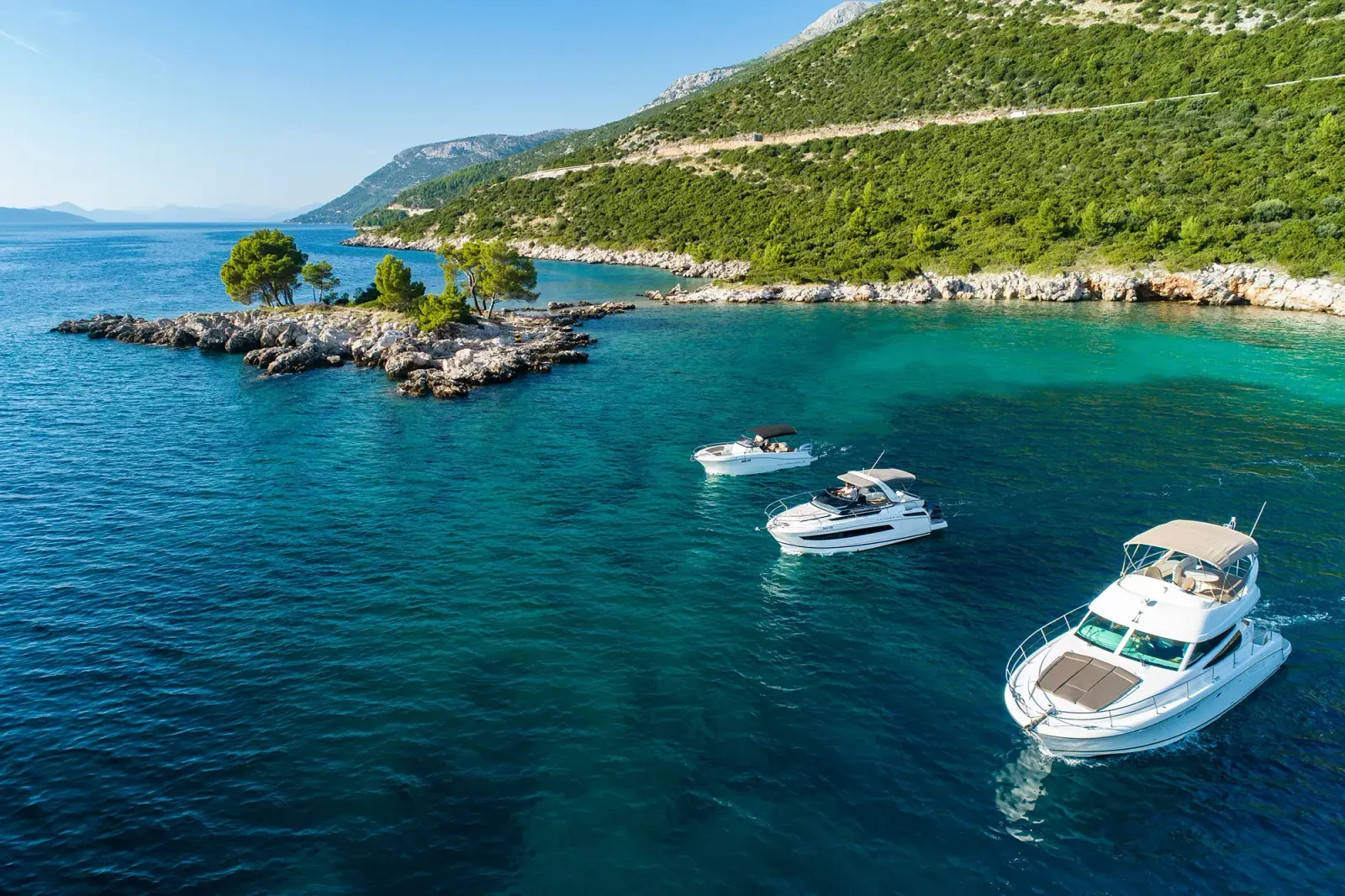
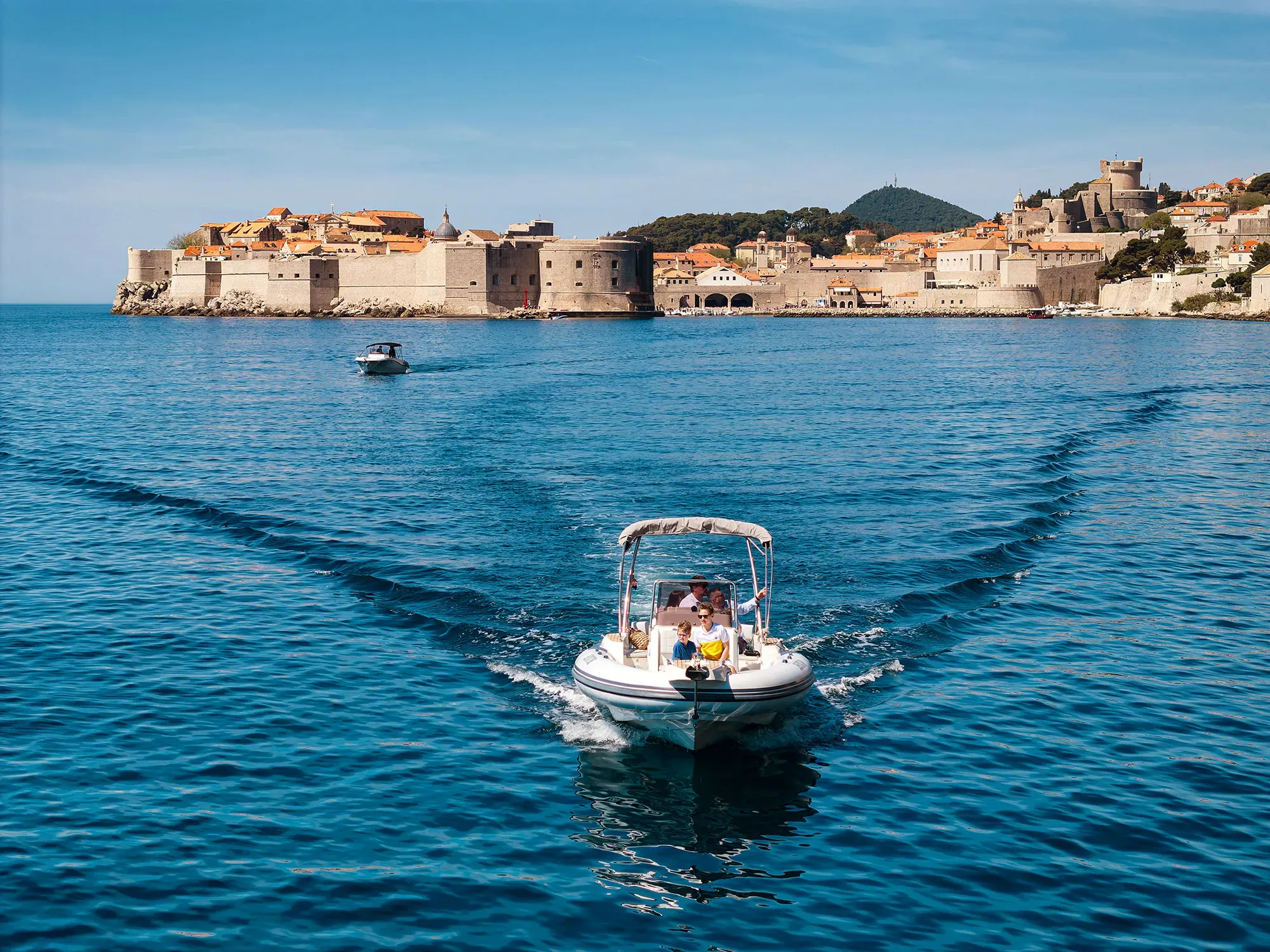
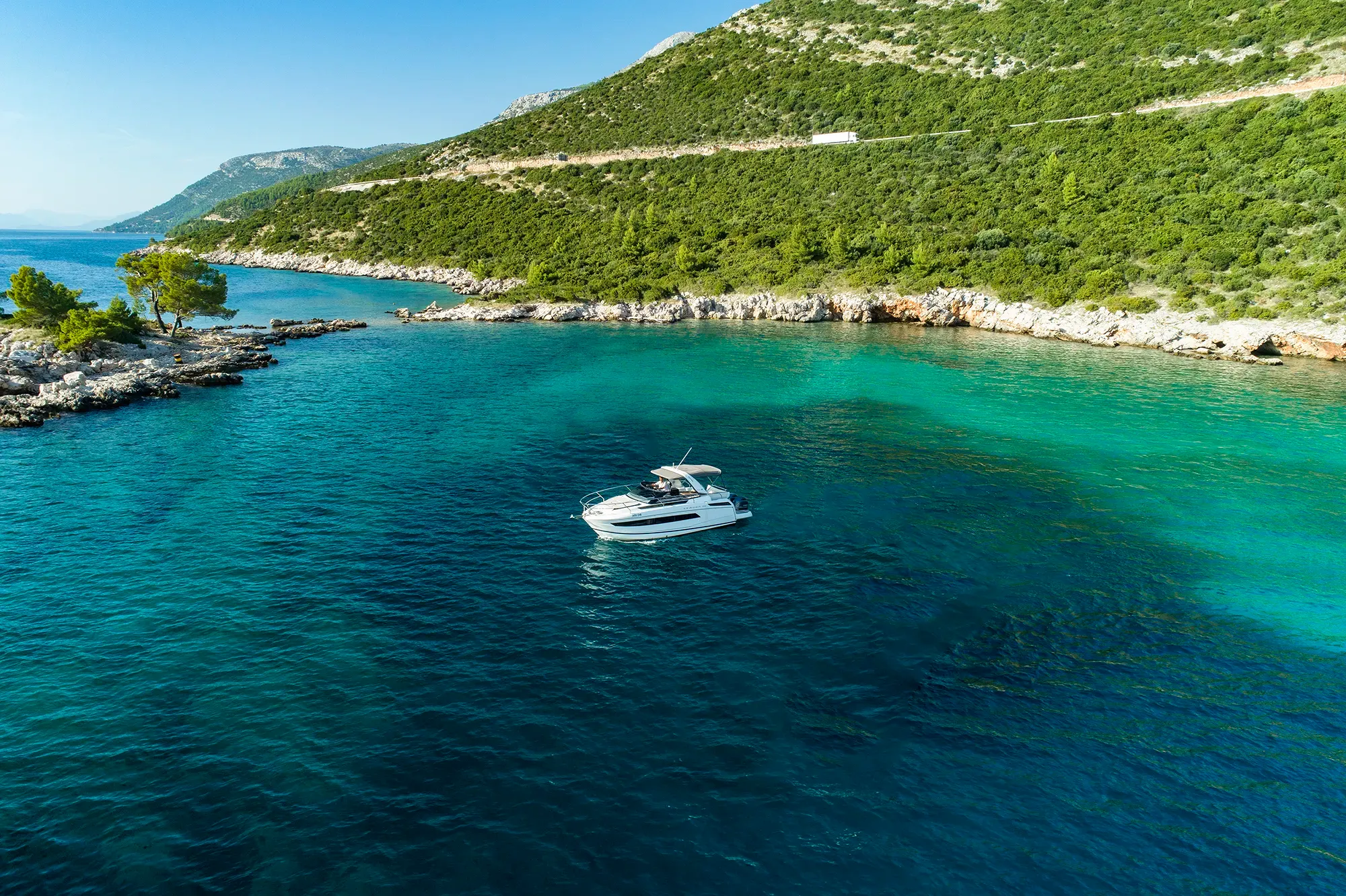
Koločep sits at the southern edge of the Elaphiti archipelago, roughly ten kilometres north-west of Dubrovnik. The island — locally called Kalamota — has an area of barely two and a half square kilometres and a population of around two hundred; it is the southernmost inhabited island in Croatia. Its southern coastline is a continuous run of limestone cliffs interrupted by hidden coves, and one of those coves holds the cave. The boat anchors off the cliff face. Getting inside means sliding into the sea and swimming a short distance through a natural gap in the rock — there is no other way in.
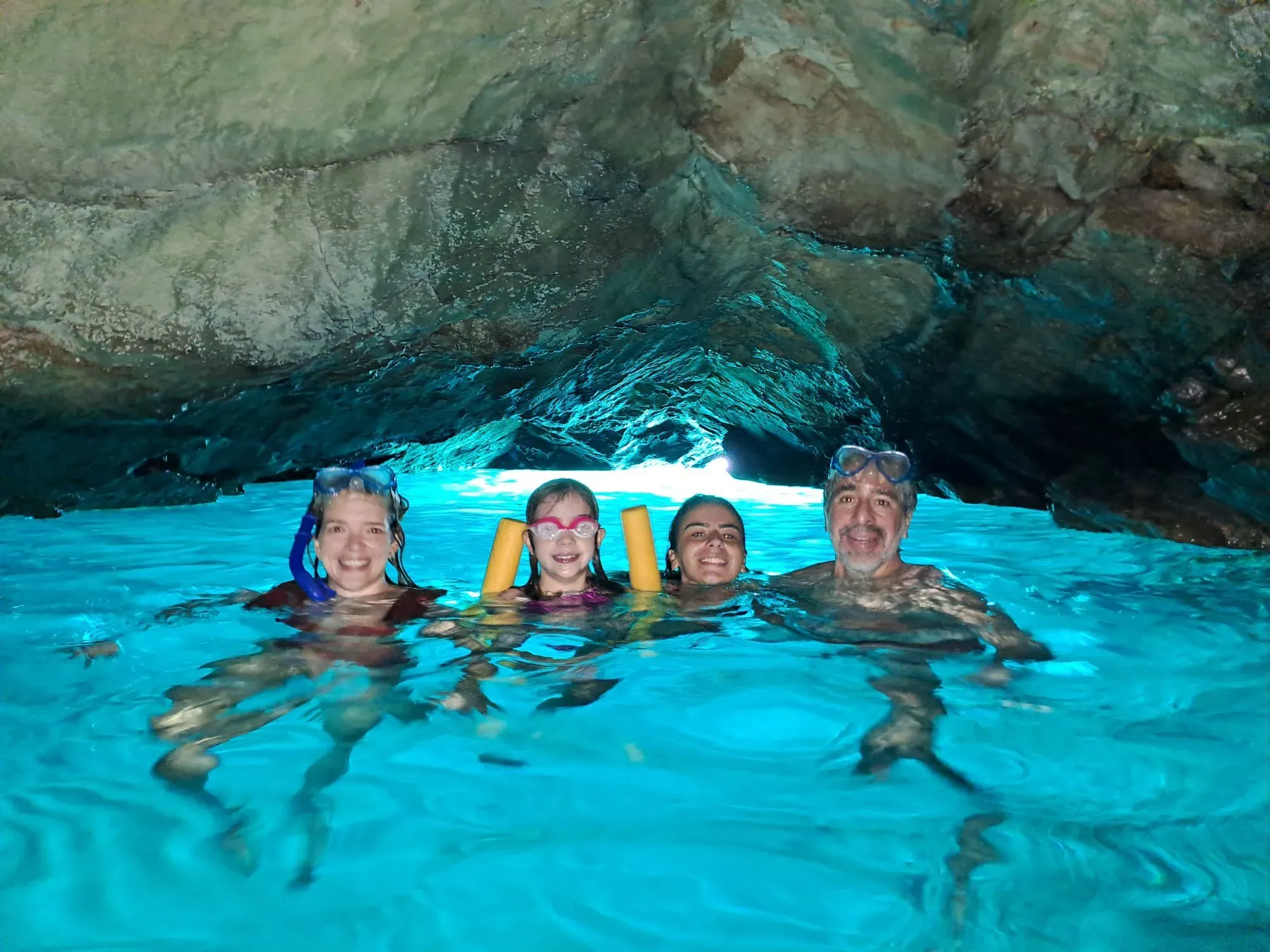
The cave's chamber is roughly fifteen metres across, with a vaulted ceiling four to five metres above the waterline. Its character changes completely depending on the time of day. When the sun is at the right angle — roughly between ten in the morning and one in the afternoon — light enters through an opening about one and a half metres below the surface, reflects off the white limestone seabed and scatters upward through the water column. The interior turns a vivid, unfiltered blue that has nothing to do with sky conditions and everything to do with refraction off pale rock. On a cloudy day the effect dims considerably; on a clear morning it is startling.
There is another Blue Cave in Croatia — the more famous Modra špilja on the island of Biševo, near Vis, discovered and publicised by an Austrian painter in 1884. That cave is entered by boat through a narrow arched opening, sits several hours' sailing from Dubrovnik and draws long queues in peak season. The Koločep version is smaller, quieter, reached by swimming rather than by a transfer chain, and twenty minutes from the city. For guests on a private speedboat it is a completely different proposition: anchor, swim in, have the chamber to yourselves for half an hour, swim back.