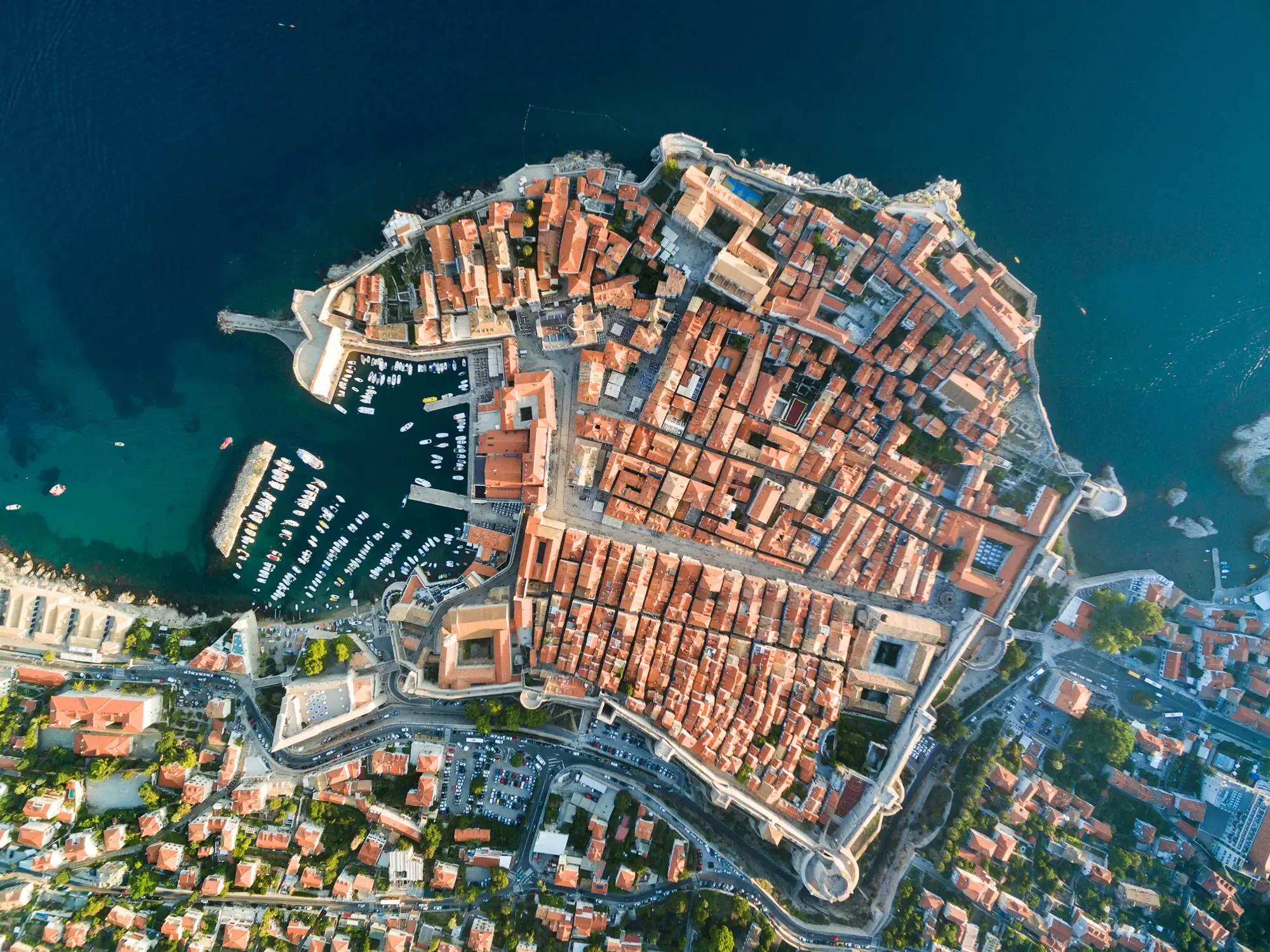
Dubrovnik began as two separate settlements — a Latin community of refugees from Roman Epidaurum living on a rocky islet called Laus, and a Slavic village on the wooded hillside opposite. In the 12th century the narrow sea channel between them was filled in, and what is today's main street, Stradun, was paved straight over the water. The two halves became one fortified city, and the foundations were laid for a small republic that would punch far above its weight for the next 450 years.
Between 1358 and 1808 Dubrovnik existed as the Republic of Ragusa — an aristocratic maritime state that ran on the principle that 'liberty is not well sold for all the gold in the world'. Its merchants traded everywhere from London to Alexandria, its diplomats outmanoeuvred the Venetians, and its ruler, the Rector, was elected for only one month at a time to stop any one family from dominating the city. The walls you see today are largely the work of that golden age, continuously upgraded between the 13th century and 1660 to keep pace with changing warfare.
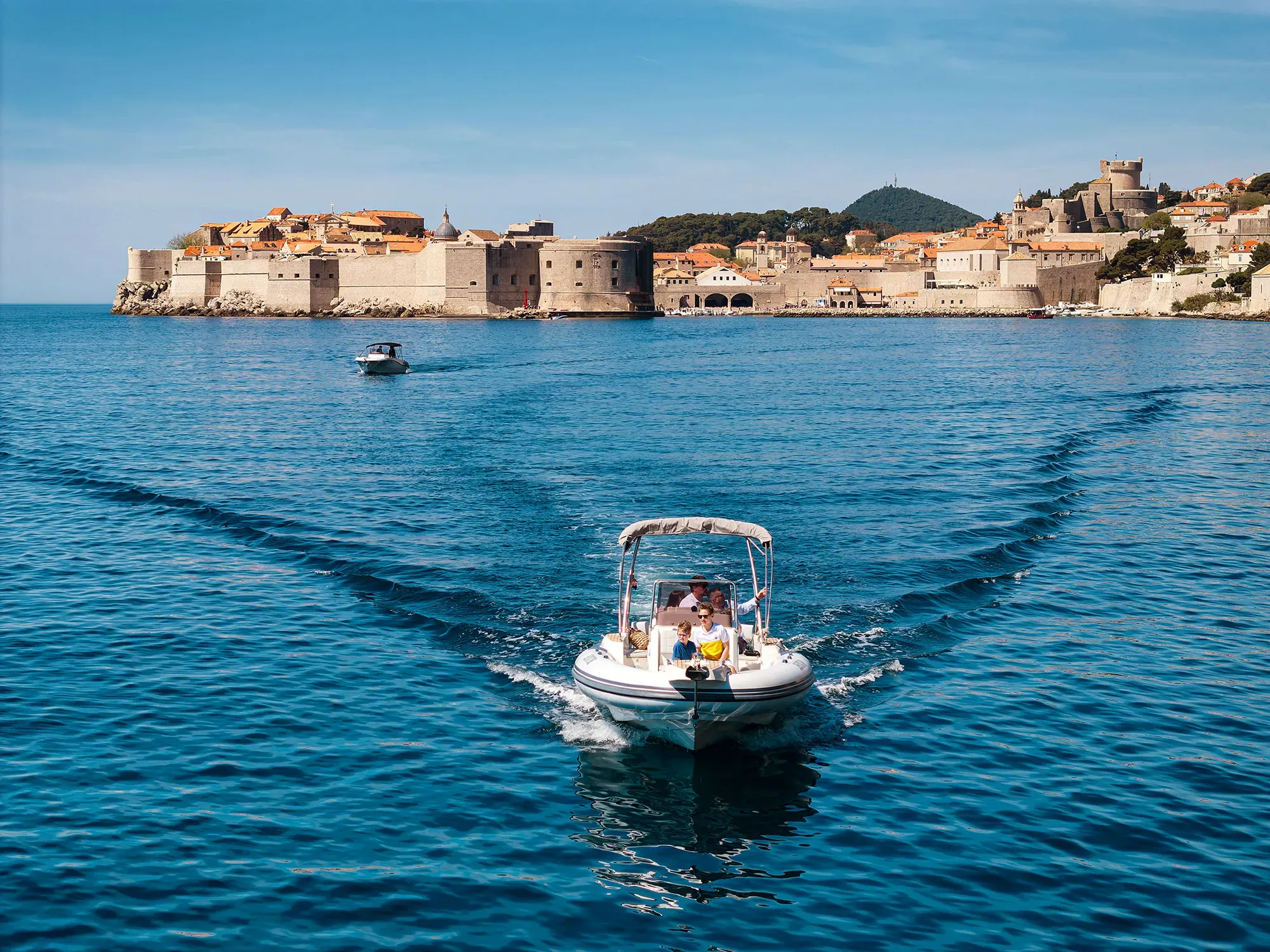
Approached by boat, the city makes more sense than from any other angle. The fortifications were designed to be read from the sea — high (up to 25 metres), thinner on the seaward face (1.5–3 metres) than on the landward side (4–6 metres) and arranged around bastions that catch the light differently as you sail past. Fort Lovrijenac rises 37 metres on its own rock to the west, the Bokar bastion guards the western entrance and the Old Port sits framed by the Revelin and St. John forts to the east.
Step inside through the Pile Gate and you walk straight onto Stradun — a long, polished limestone promenade lined with the uniform Renaissance-Baroque facades rebuilt after the devastating 1667 earthquake. Around it cluster the survivors: the Sponza Palace from the 1510s, the Rector's Palace with its Gothic colonnade, the Onofrio Fountain. Television fans will recognise much of it too — Fort Lovrijenac doubled as the Red Keep in Game of Thrones, the Jesuit Stairs are where Cersei began her Walk of Shame, and Stradun itself stood in for most of the King's Landing street scenes.