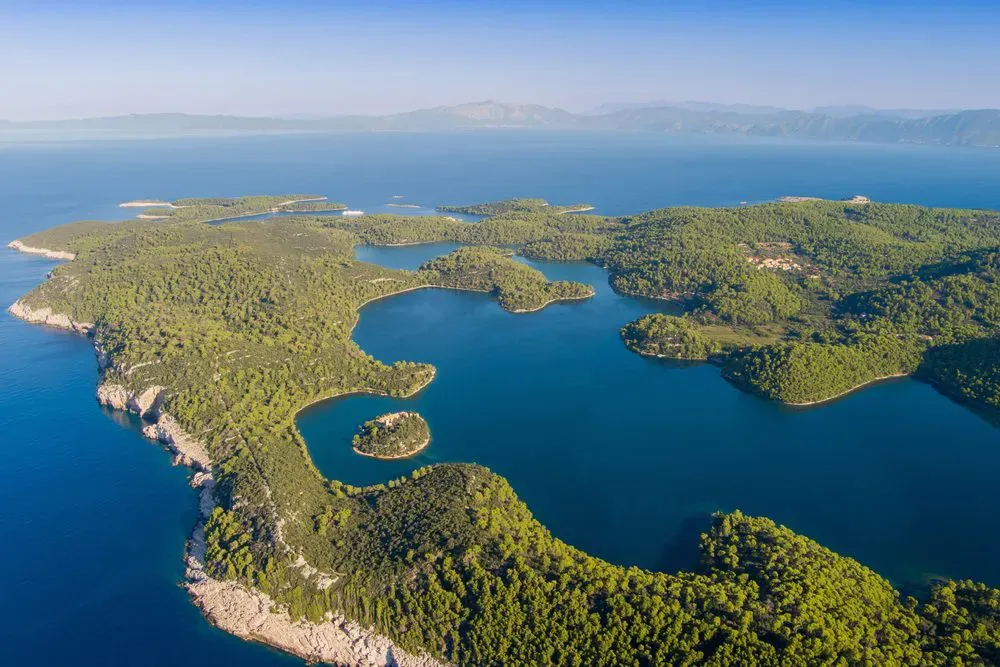
Šipan is the northernmost and largest of the three inhabited Elaphiti Islands — Koločep and Lopud being the other two — and sits roughly seventeen kilometres north-west of Dubrovnik across the Koločep Channel. The island is about nine kilometres long and up to two and a half wide, with a central valley running between two low limestone ridges. The valley is covered in olive trees, fig trees, vineyards, carob and citrus, with little sign of the twenty-first century beyond the road itself. Šipan holds a Guinness World Record for the highest density of olive trees relative to its population and size — the island has more than three hundred thousand of them.
There are two villages. Suđurađ sits at the south-eastern end of the island and is the ferry port. Its harbour is dominated by the fortified summer villa of the Stjepović-Skočibuha family, a Ragusan merchant dynasty that built the main house in the sixteenth century and added a tall defence tower in 1577 as a watch against pirate raids from the Adriatic. The family's fortune came from trade — Vice Stjepović-Skočibuha was among the wealthiest merchants of the Dubrovnik Republic — and the villa they built here was one of the grandest private residences in the Elaphiti. Šipanska Luka lies at the north-western end of the island, about five kilometres from Suđurađ along the valley road. It is a larger village with a wider harbour, the remains of a Gothic Rector's palace that once housed the island's Ragusan administrator, and the fragmentary remains of a Roman villa at the water's edge.
In the fifteenth and sixteenth centuries, Šipan was the preferred summer retreat of Dubrovnik's merchant aristocracy. At least forty-four villa estates from the Ragusan period survive on the island, in various states of preservation — some intact, some rebuilt, some reduced to perimeter walls and garden terraces in the olive groves. The nobility came to escape the city's summer heat, to manage their estate crops and to entertain. The fortified Holy Spirit church, built in 1577 at the southern end of the island, was part of the same investment in the island's fabric. Šipan was prosperous, organised and — by the standards of its time — remarkably well-built. Most of that architecture survives in some form.
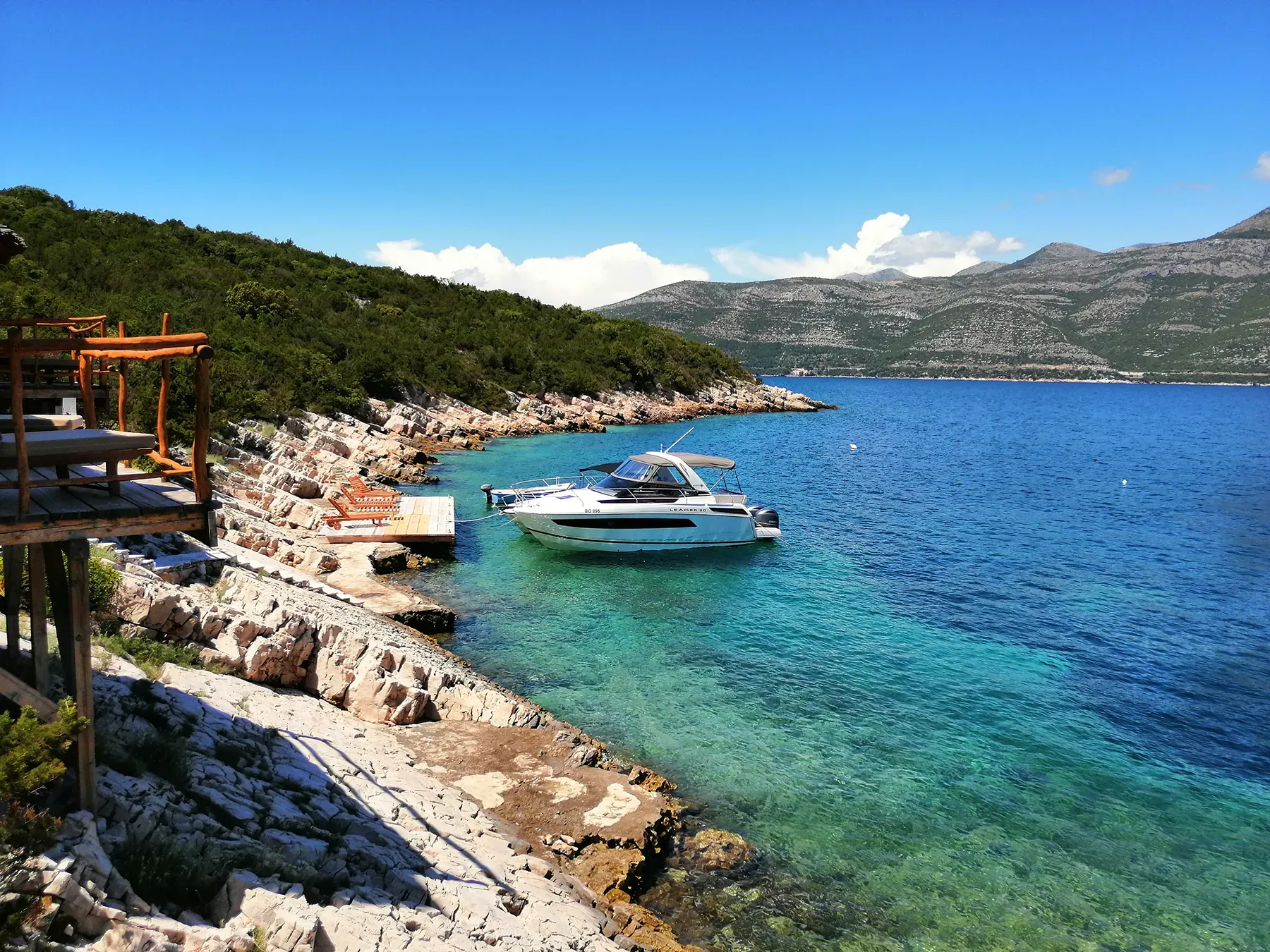
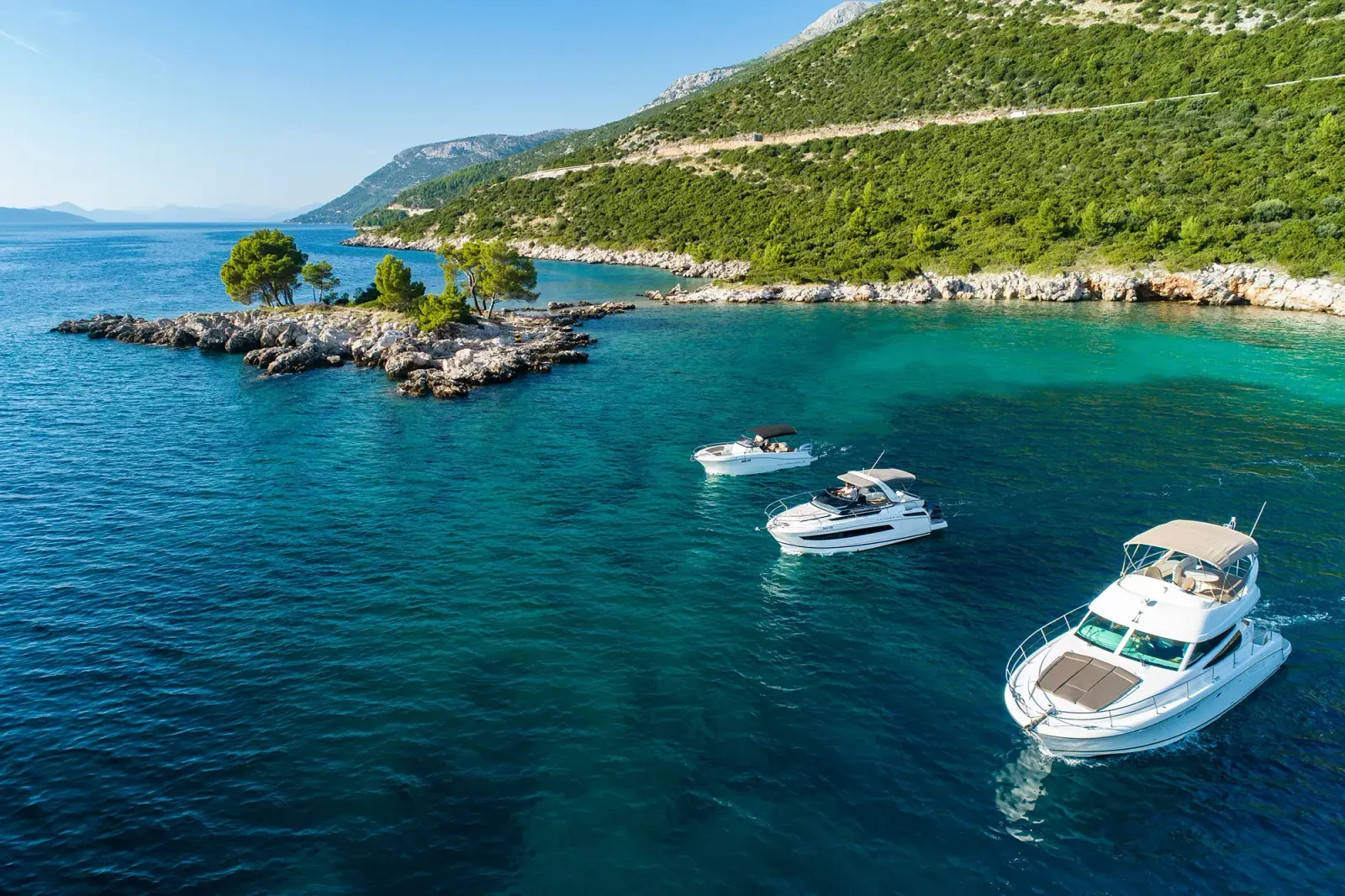
Today the island has a permanent population of under three hundred people and almost no tourist infrastructure. There are no beach clubs, no water-sport hire, no organised excursions. Boats visit the harbours, guests explore on foot, and the valley road between the two villages is quiet enough to walk in the middle of the day without stepping aside for traffic. The calm of Šipan is its main quality — it is the reason the Ragusan nobles came here, and the reason guests still do.