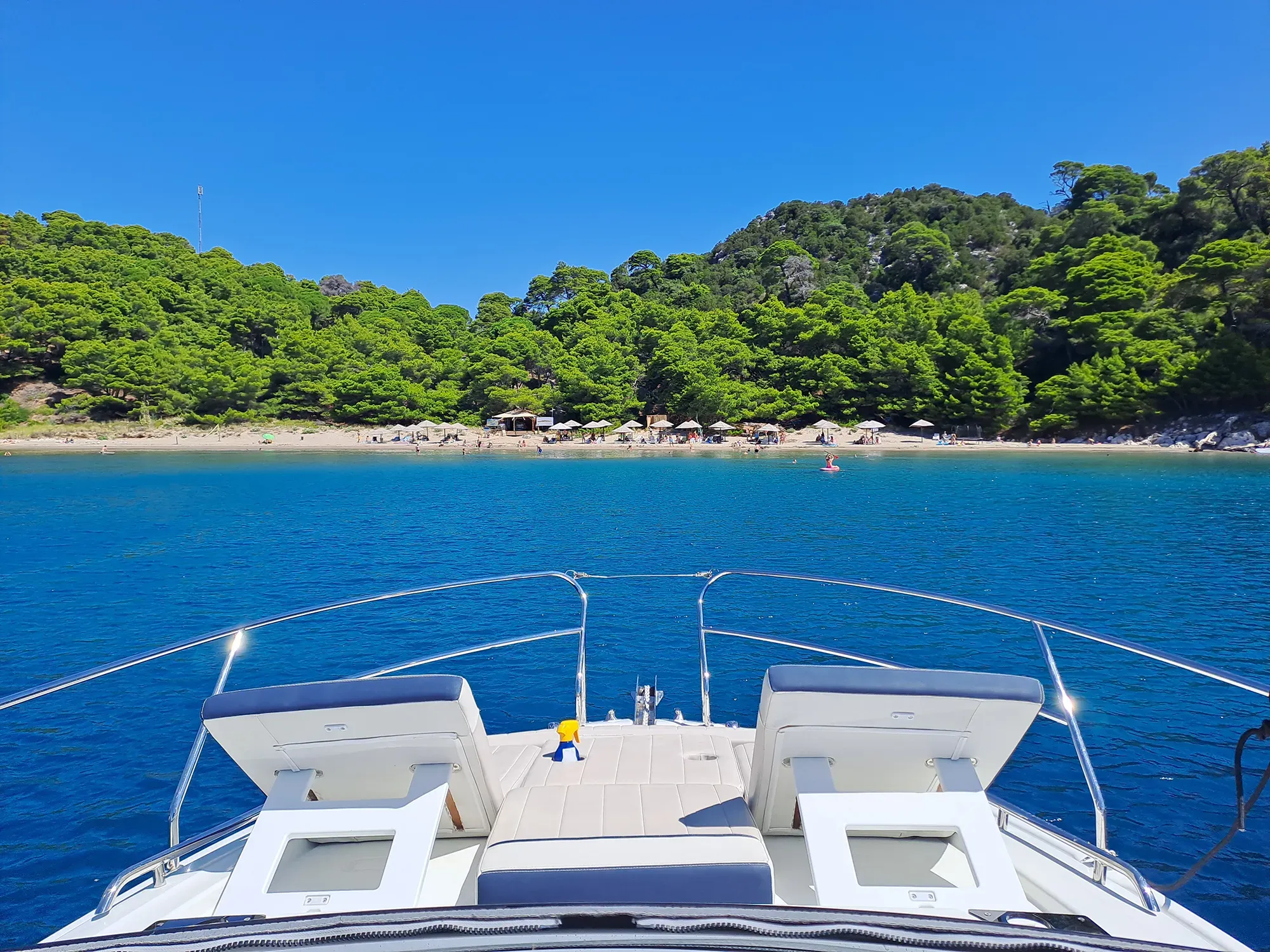
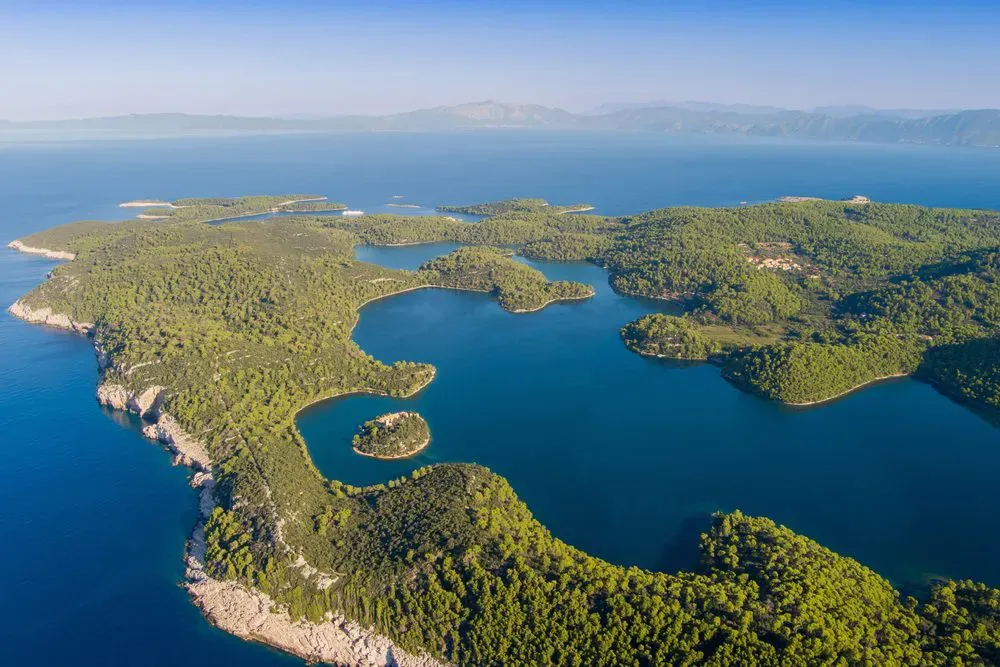
Saplunara sits at the south-eastern tip of Mljet, roughly forty kilometres by road from the National Park at the island's western end — a journey that takes the best part of an hour on island roads. The bay opens towards the south-west, which means it catches afternoon sun and is sheltered from the bura and the maestral that can make other parts of the coast choppy. It is roughly a kilometre long, and divides into two beaches: Velika Saplunara (the larger, facing south-west) and Mala Saplunara (smaller, slightly tucked, generally quieter). Around the headland to the east lies Blaca, also known as Limuni — the same stretch of coast we visit as the Lemon Lagoon stop. The sand is not incidental. The name comes from the Latin sabulum, meaning sand, and the Croatian Adriatic is otherwise almost entirely shingle and limestone. The beach material here traces to Pleistocene sediments: ancient deposits that the sea gradually erodes and reworks onto the shore, producing the fine, pale sand that makes the water over it appear an unusually clear turquoise.
The area has been under some form of legal protection since the mid-1960s, initially as a botanical reserve. Since 2013 it has held Natura 2000 status — European designation HR4000010, covering 127.69 hectares. Two habitat types are protected under the EU Habitats Directive: embryonic shifting dunes (habitat code 2110), which are rare anywhere on the Adriatic and exceptionally rare this far south; and Mediterranean pine forests with endemic Mesogean pines (code 9540). Behind the beach Aleppo pines (Pinus halepensis) and juniper grow in dense stands. In the sand itself, psammophyte plants adapted to shifting dune conditions — including Elymus farctus and Echinophora spinosa — form the living foundation that holds the dune structure in place. A marked trail runs through the pine forest behind the beach with interpretive signs in Croatian and English. The instruction to stay on the path and not pick plants is not decorative: the dune ecosystem is the reason the beach exists.
For swimming, the shallow shelf is the defining feature. Thirty metres from shore the water is still under two metres deep, and the sandy floor keeps it warm and clear well into October. There are no umbrellas, no sun lounger rentals, no beach bar — the shade, when guests want it, comes from the pines behind the sand. A small seasonal restaurant in the hamlet serves grilled fish and local wine for groups that want to extend the stop. According to local tradition, the apostle Paul landed somewhere along this coast in AD 61 after a shipwreck, and spent three months here before sailing on — the ruins of a church above the bay are still called St Paul's church, and the official seal of Mljet county carried his image from 1850 until 1921. Malta holds the competing claim, on the grounds that the Acts of the Apostles name the place 'Melita', a name both islands carried in antiquity.