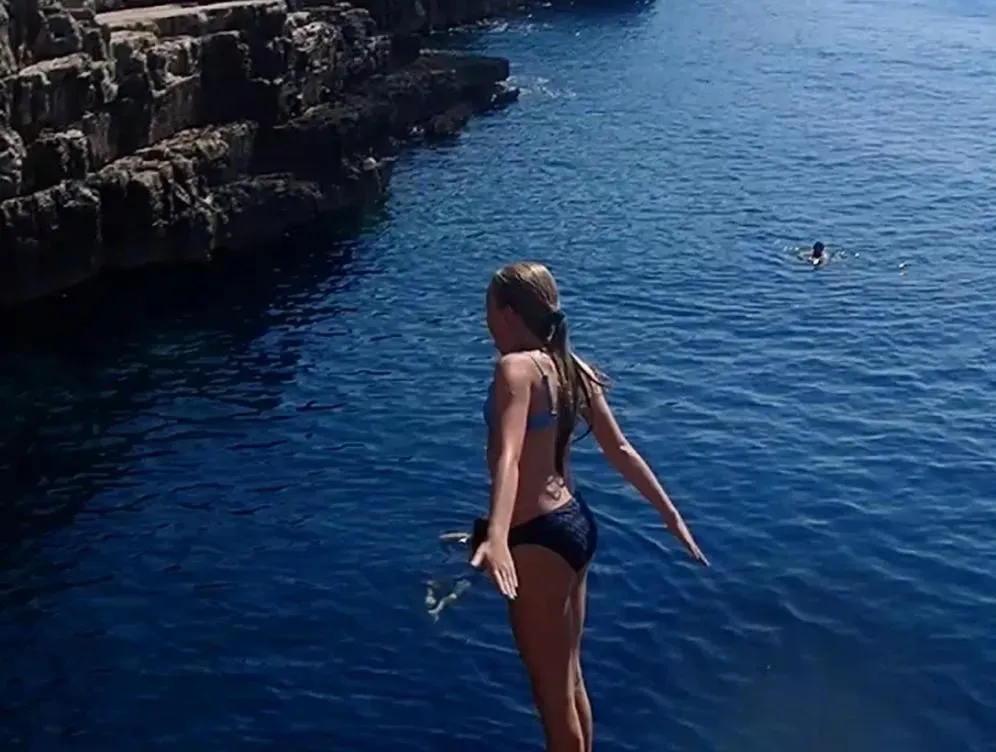
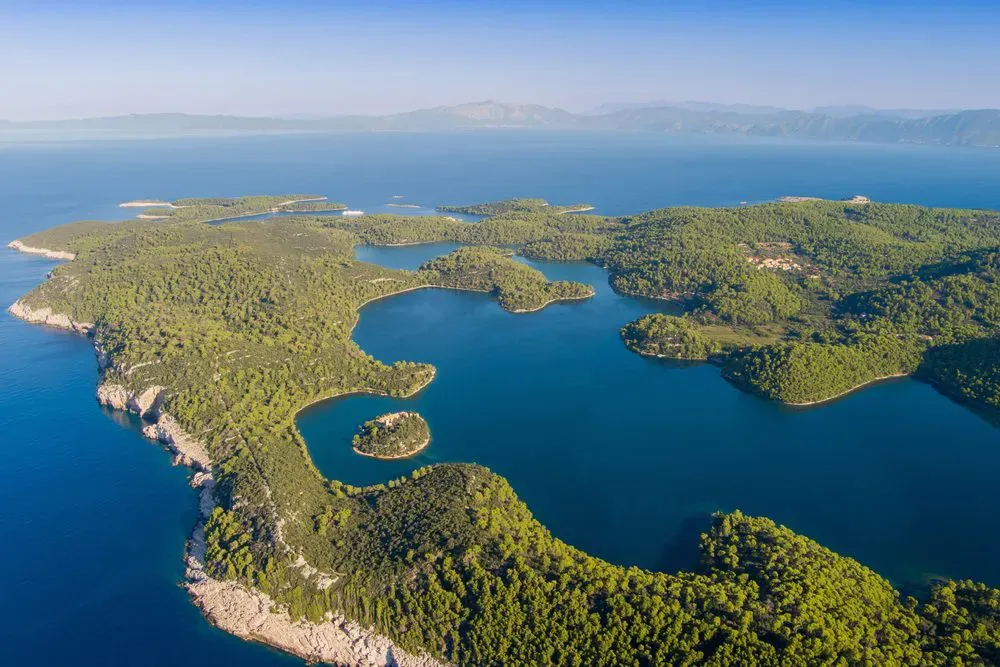
Locals call it 'Jama' — the Pit — because it is not a cave in the conventional sense. The limestone ceiling collapsed at some point in the distant past, leaving a roughly oval chamber open to the sky, with sheer rock walls rising on every side and a floor of seawater. That seawater is connected to the open Adriatic by a tunnel roughly twenty metres long and eight to ten metres deep, cut through the base of the cliff. It is wide enough for a small boat to pass through, which is why the people of Babino Polje — the largest village on Mljet, a short steep path above — have been using the chamber as a sheltered harbour for their fishing boats for generations. The sight of a working wooden boat moored at the bottom of a pit you have just swum into, with nets drying on ledges and nothing but sky overhead, is not easily forgotten.
The legend attached to this place is older than the village. According to local tradition — held for long enough that the island's national park authority takes it seriously — Mljet is the Ogygia of Homer's Odyssey. Before the cave entrance lies a rock called Ogiran, which disappears beneath the surface at high tide and during strong southerly winds. The story goes that a returning Odysseus struck this rock in a storm, swam to shore, and took shelter in the chamber below. The nymph Calypso, whose domain this was, kept him there for seven years before the gods intervened. Malta also claims the title of Ogygia, but the physical case for Mljet is harder to dismiss: Homer describes olive groves and vineyards growing down to the water beside the shipwreck site, and Babino Polje has exactly that, in exactly that arrangement, directly above the cave.
The way in from the sea is to let the boat idle into the tunnel and emerge on the other side into the open chamber. For most of the day the interior sits in shadow — the walls are high enough to block direct sunlight from all but a narrow overhead window. Around noon in summer, when the sun is directly above, light reaches the water and the surface shifts through a range of blue and green that is distinct from the shadowy calm of the rest of the day. Snorkelling here feels genuinely remote: the cave is on a part of the island that most tourists never reach, the walls absorb sound, and the working boats moored in the corner are a reminder that this place belongs to Babino Polje first and to visitors second.